Selling a home in Denton County in 2026 is not the same exercise it was in 2021 or 2022. The sellers who walk away with the most money this year are not the ones who assume the market still works the way it did during the pandemic run-up. They are the ones who understand exactly what today's market actually looks like, prepare their homes for how buyers actually behave right now, and price based on current data rather than wishful thinking.
I have been helping sellers across this county for nearly three decades. I have watched markets run hot, pull back, rebalance, and run again. What I know with certainty is this: in every kind of market, the sellers who are prepared outperform the ones who aren't. The difference between a strong outcome and a disappointing one is rarely luck. It is strategy, preparation, and execution.
This guide covers everything a Denton County seller needs to know to navigate today's market confidently and come away with the strongest possible result.
Understanding the Denton County Seller's Market in 2026
The single most important thing a seller can do before listing is understand the market they are actually entering, not the market they heard about from a neighbor who sold two years ago.
Denton County's market in 2026 is in a deliberate transition toward balance. After several years of extreme seller-side conditions, where homes moved in days and buyers waived inspections and appraisal contingencies without hesitation, the market has rebalanced significantly. More inventory, longer days on market, and a buyer pool that is more analytical and less emotionally driven than at any point since the pandemic are the defining characteristics.
That does not mean selling is a bad proposition in 2026. It means selling in 2026 requires a fundamentally different level of strategy and preparation than sellers needed just two or three years ago.
Denton County Seller Market Snapshot - Q1/Q2 2026
County Median Sale Price | $425,000 (down 4.5% year-over-year) |
|---|---|
Average Days on Market | 89 days (up from 74 days last year) |
Sale-to-List Ratio (County) | 95.13% – 97% (varies by source and period) |
Homes with Price Reductions | 57.72% of active listings (Orchard, Q2 2026) |
Homes Sold Above List Price | 7.61% (Orchard, Q2 2026) |
Active Listings | 5,409 county-wide (up 5.5% year-over-year) |
Months of Supply (County) | 3.7 – 4.0 months (approaching balanced market) |
Jan 2026 Closed Sales | 717 (down from 853 same month last year) |
Flower Mound Median | $622,500 (up 10.9% YOY; 2.1 months supply) |
Flower Mound DOM | 25 – 44 days (outperforming county average) |
Argyle Active Listings | 330 homes; 53% have taken price reductions |
Argyle DOM | 64 – 83 days |
Northern Corridor Adjustments | Sanger -6.2%, Lake Dallas -5.5%, Denton city -5.1% |
30-Year Mortgage Rate | ~6.1% – 6.2% (Freddie Mac, February 2026) |
(Sources: Redfin January/March 2026, Orchard Q2 2026, Cross Timbers Gazette February 2026, The Alternative Agent Spring 2026, Freddie Mac PMMS February 2026.)
The numbers tell a clear story: the county overall is a more challenging environment for sellers than it was two years ago. But the story is not uniform. Flower Mound, with just 2.1 months of supply and homes selling in 25–44 days, is behaving like a fundamentally different market from Argyle, where 330 active listings and a 53% price reduction rate signal much stronger buyer leverage. Southern Denton County communities, including Flower Mound, Argyle, and Highland Village, have proven more resilient than the northern corridor, where price declines have been steeper.
Understanding where your specific community sits within this landscape, and pricing your home accordingly, is the most important strategic decision you will make as a seller in 2026.
The Number One Mistake Denton County Sellers Make in 2026
It is overpricing. It is always overpricing. And in today's market, it is more costly than it has ever been.
Here is why. Orchard's current Q2 2026 data shows that 57.72% of active listings in Denton County have already taken at least one price reduction. More than half of all sellers listed their homes at a price the market rejected. They went through the frustration of extended days on market, reduced their price, and ultimately sold for less than they would have received had they priced correctly from the beginning.
This is not theoretical. The data is consistent and clear: homes that sit on the market accumulate stigma. When buyers in today's analytical market see a listing that has been active for 45, 60, or 90 days, their first question is 'what's wrong with it?' That perception, whether justified or not, translates directly into lower offers, more aggressive inspection negotiations, and larger concession requests. The price reduction a seller eventually accepts is almost always larger than the reduction that would have driven a competitive offer in the first two weeks.
The first 7 to 10 days on the market are the most critical window in any listing. NTREIS market data and multiple local market professionals confirm this consistently. A well-priced, well-presented home generates its strongest activity immediately after listing, when buyer interest is highest and the 'new listing' premium is fully intact. Sellers who price correctly from day one capture that premium. Sellers who overprice and correct later do not.
Pricing Strategy: How to Get It Right from Day One
Effective pricing in 2026 is a discipline, not a guess. It requires current data, neighborhood-level analysis, and an honest reckoning with your competition, including new construction.
Step 1: Build a Genuine Comparable Sales Analysis
A Comparative Market Analysis (CMA) is only as good as the comparables it uses. In 2026's changing market, the selection of comps is critical. Use these parameters:
Closed sales within the last 60–90 days - not 6 months. The market has moved, and older sales may not reflect current buyer sentiment
Same school district zone - school district boundaries create meaningful price differences even between adjacent streets in Denton County
Comparable square footage within 15% - price per square foot is more reliable than raw sale price for size-adjusted comparison
Similar age, condition, and finishes - a fully updated home from 2005 and an original-condition home from 2005 are not the same comparable
Note the active listings in your price range - these are your competition. Buyers will compare your home to every active listing within your price tier and neighborhood
Step 2: Understand What Your Market Is Telling You Right Now
Each community within Denton County requires a different pricing approach in 2026:
Flower Mound: The tightest inventory in the county at 2.1 months. A 96.6% sale-to-list ratio and DOM of 25–44 days means well-priced homes are still transacting competitively. Sellers here have the most pricing power in the county, but 'most' is relative. The 45% of active listings that have taken price reductions confirm that even Flower Mound is not forgiving of significant overpricing
Argyle: 330 active listings and a 53% price reduction rate signal a market where buyers have genuine leverage. Sellers in Argyle need to price at or slightly below recent comps to generate early activity. Attempting to 'test the price' in Argyle in 2026 is a strategy for extended market time and a larger final discount
Bartonville: The luxury estate market requires a narrow comparable set and patient positioning. At price points above $2 million, the buyer pool is small and highly informed. Precision pricing, thorough marketing to luxury buyer channels, and a long-term listing strategy are essential
Lantana: A steady, lifestyle-driven market. Well-presented, move-in-ready homes at market pricing continue to attract the community's consistent buyer base. Condition and presentation matter significantly in a community where buyers are comparing multiple listings within the same neighborhood'
Step 3: Price Against New Construction, Not Around It
New construction remains a genuine competitive force in Denton County's $400,000–$700,000 segment, with homebuilders continuing to add supply across the county's growth corridors. Resale sellers who price as if new construction doesn't exist are setting themselves up for extended market time.
Here is what builders offer that resale cannot match: warranty coverage, energy-efficient construction, modern open floor plans, and, most importantly, builder incentives that can include interest rate buydowns, design credits, and closing cost contributions worth $20,000 or more on certain transactions.
The resale advantage is equally real: established neighborhoods, mature landscaping, larger lots, character that cannot be manufactured, and locations that new construction communities simply cannot replicate. The key is pricing your resale property to reflect this trade-off honestly, not ignoring the competition.
Presentation: Staging, Repairs, and Photography
In a market where buyers are analytical, comparison-shopping, and have more options than at any point since the pandemic, presentation is no longer a nice-to-have. It is a direct financial lever.
Home Staging ROI Data - 2025/2026
Staged vs. unstaged sale price | Staged homes net 5–15% more than unstaged properties |
|---|---|
On a $620,000 Flower Mound home | 5–15% more = $31,000 – $93,000 additional proceeds |
Staged homes' time on market | Spend 33–73% less time on market than unstaged homes |
Average staging cost | $1,500 – $1,849 (NAR 2025; RESA 2025 data) |
RESA 2025 ROI per $1 invested | $23.34 average return on every dollar of staging spend |
Overall staging ROI | Can exceed 550% - outpaces most pre-sale renovations |
Buyers who visualize via staging | 81% of buyers' agents say staging helps buyers see home as theirs |
Buyers expecting staged condition | 48% of agents report buyers now expect staged presentation standard |
Price reductions vs. staging cost | Sellers who skip staging face price reductions 5–20x the cost of staging |
(Sources: National Association of REALTORS 2024–2025 Profile of Home Staging; RESA Q1 2025 Market Insights; RubyHome February 2026; The Zebra January 2026.)
The return on staging investment is not marginal, it is one of the highest-return pre-sale actions any seller can take. On a $620,000 Flower Mound home, a 5% price premium from staging translates to $31,000 in additional proceeds against a staging cost of $1,500 to $2,000. The math is straightforward.
Focus staging effort on the spaces that drive the most buyer response: the living room (identified as the most important staged space by 46% of buyers), the primary bedroom (43%), and the kitchen (35%). These three rooms account for the overwhelming majority of a buyer's emotional response to a home.
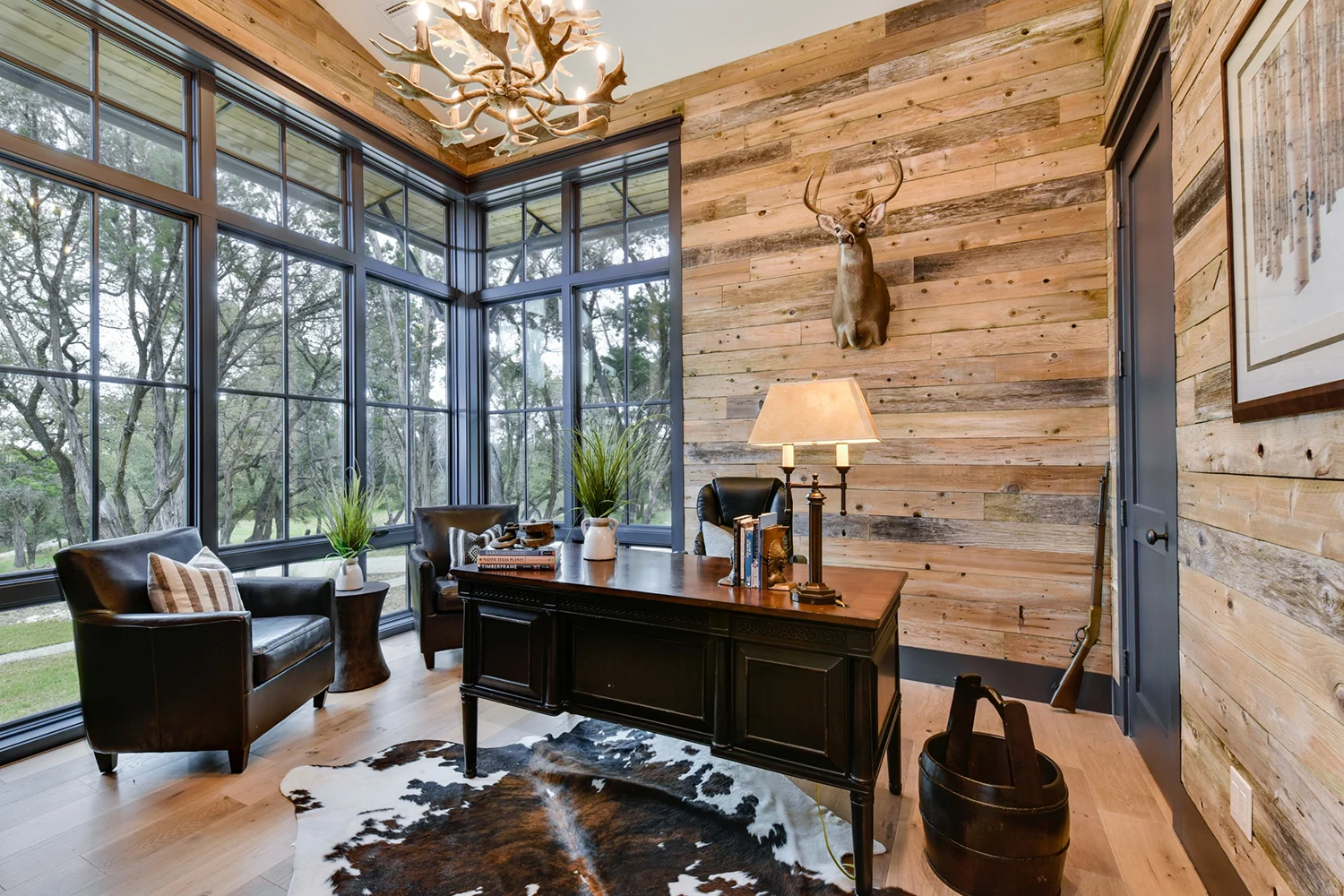
If full professional staging is outside your budget, prioritize: removing personal items and excess furniture, neutral paint throughout, deep cleaning every surface, and professional photography. These four actions cost far less than full staging but capture a significant portion of the presentation premium.
Pre-Listing Repairs: Spend Where It Returns
Not all pre-listing investments deliver equal returns. Here is where sellers should focus their repair budget in 2026's Denton County market:
HVAC service and certification: The most common inspection issue in the county's 25-year-old housing stock and an immediate buyer concern. A current service record or warranty assignment eliminates a negotiation point
Roof inspection and minor repairs: Even a marginal roof in the $500K+ market triggers repair credits or deal delays. A current inspection report with documented minor repairs removes uncertainty
Fresh interior paint in neutral tones: The highest-return cosmetic investment available to any seller. Clean, neutral walls make spaces feel larger and newer at minimal cost
Landscaping and curb appeal: The first photograph and the first impression both start outside. Power-washing the driveway, refreshing mulch, trimming overgrowth, and planting seasonal color in flower beds costs very little relative to its impact on buyer first impression
Lighting updates: Replacing outdated light fixtures with current finishes is a low-cost, high-impact update that photographs well and signals the home has been maintained
What sellers should generally avoid investing in pre-listing: full kitchen renovations, bathroom additions, pool installations, or any major structural upgrade. These investments rarely return their cost in a sale, and in many cases, a buyer's preferences for finishes differ from what the seller would choose. Targeted cosmetic improvements deliver; major renovations for sale purposes typically do not.
Photography and Digital Marketing: Non-Negotiable in 2026
Ninety-seven percent of today's buyers begin their home search online. Your listing photographs are your first showing. In a market where buyers are comparison-shopping multiple listings simultaneously, the quality of your photography directly affects how many buyers decide to schedule a tour.
Professional real estate photography is not optional at any price point in Denton County's market. For homes above $750,000, video walkthroughs and aerial drone footage have become standard expectations. For luxury properties in Bartonville and Tour 18, cinematic video marketing that reaches national and out-of-state buyer channels is an essential component of a competitive strategy.
According to local market data, listings with video tours and strong social media exposure see meaningfully higher buyer engagement than listings relying solely on MLS photography. In a market where your competition includes 5,409 active listings county-wide, standing out in digital channels is a direct competitive advantage.
Your Most Critical Window: The First 7 to 10 Days on Market
Understanding this principle is central to everything else in this guide. The first seven to ten days after your listing goes live are the period of maximum buyer attention, maximum showings, and maximum offer potential. Every day beyond that window, your listing loses relative standing as newer listings enter the market and buyers who toured your home without offering move on.
Here is what drives that window: buyers actively watching the Denton County market have saved searches that notify them the moment a new listing matching their criteria appears. In the first 48 to 72 hours after your listing activates, you are capturing the attention of every buyer who has been waiting for a home like yours. That concentrated attention is what produces multiple-offer scenarios and above-list-price offers, when they happen.
The implications for sellers are direct:
Your home must be fully prepared before it lists, not during the listing period. Repairs, staging, and photography must be complete on day one. Listing a home that 'just needs a little touch-up' during the active period costs you the window
Price correctly before you list, not after you see the response. By the time the market tells you your price is wrong, you have already lost the window's premium
Launch timing matters. Local market professionals consistently identify February through May as the strongest selling season in Denton County, with February described as the 'sweet spot' before full spring competition arrives. Listing in this window maximizes exposure to the season's most active buyer pool
Weekend activation maximizes early traffic. Listings that go live Thursday or Friday capture the highest weekend showing volume, which is when the majority of tour activity occurs
Negotiation Strategy for Sellers in 2026
The negotiation landscape in 2026 is meaningfully different from the seller-side leverage of two or three years ago. Buyers have more options, more time, and higher expectations. Sellers who approach negotiations with 2022 assumptions will be frustrated. Sellers who understand today's dynamics can still achieve strong outcomes.
What Buyers Are Negotiating on in 2026
The data from multiple Denton County sources confirms that buyers are successfully negotiating on dimensions that were largely unavailable to them during peak conditions:
Repair credits following inspection: Buyers are exercising option periods and requesting repair credits or price reductions based on inspection findings. Sellers who have addressed known issues pre-listing are in a much stronger negotiating position
Closing cost contributions: Buyers, particularly first-time buyers and those stretching to purchase in higher price tiers, are regularly requesting seller contributions toward closing costs. In today's market, offering a modest contribution upfront as part of a counter-offer strategy can be more effective than a pure price reduction
Rate buydowns: Sellers in competitive situations are increasingly offering interest rate buydown contributions (also called 2-1 buydowns or permanent rate reductions via points) to differentiate their listings and directly address buyer affordability concerns. This strategy addresses the mortgage rate obstacle without the permanence of a price reduction
Option period terms: Buyers are requesting standard 7–10 day option periods and sellers are accommodating them. Resisting standard option periods in 2026 creates friction without meaningful benefit
Price adjustments on stale listings: Homes that have been on the market 30 days or more are seeing larger negotiated discounts. The best defense against this dynamic is avoiding extended market time through correct initial pricing
Strategies That Protect Your Net Proceeds
There are several approaches that sellers can use to protect their financial outcome without simply accepting the first lowball offer:
Counter with terms rather than conceding on price. If a buyer requests a price reduction, consider counter-offering at your asking price with a closing cost contribution instead. The out-of-pocket impact to you may be similar, but the recorded sale price, which affects your neighborhood's comparable sales data, is preserved
Use the seller's net sheet as your anchor. Focus every negotiation on what you will walk away with, not the gross sale price. Your broker should prepare a detailed net sheet for any offer received so you can compare apples to apples
Know your walk-away number before you receive any offer. Sellers who haven't defined their minimum acceptable net before they start receiving offers are more susceptible to pressure in the negotiation. Define your floor in advance and negotiate from that position
Understand the buyer's motivation. A buyer who is under time pressure, relocation deadline, lease expiring, school enrollment, has less leverage than a buyer with no urgency. Your broker should be gathering this intelligence during showings
What Sellers Actually Walk Away With: The Net Proceeds Reality
One of the most important conversations I have with every seller is about their actual net proceeds, not the sale price, but what goes into their bank account after all costs are settled. Many sellers are surprised by how much comes off the top. Understanding this number in advance is essential for planning your next move.
Texas Seller Closing Costs
Total seller closing costs (Texas) | 6% – 10% of sale price (including all fees and commission) |
|---|---|
Broker commission (both agents) | Avg 5.85% – 5.88% total (listing agent avg 2.88%; buyer's agent avg 2.97%) |
Non-commission closing costs | Approx 1.5% – 2.5% of sale price |
Title insurance (seller's policy) | Approx $3,100 – $3,400 on a $600K sale (reduced 6.2% post-March 2026) |
Property tax proration | Texas taxes paid in arrears. Seller owes prorated taxes for their ownership period |
HOA resale certificate (if HOA) | Typically $200 – $400 |
Survey (if required) | $400 – $700 (buyer may request current survey) |
Seller concessions / credits | Market-dependent; increasingly common in 2026 (repair credits, closing cost contributions) |
(Sources: Neuhaus Realty Complete 2026 Guide to Texas Seller Closing Costs (February 2026); iBuyer.com Texas Seller Closing Costs (May 2026); Houzeo Texas Seller Calculator (March 2026)).
The most important tool in your pre-listing planning is the seller's net sheet, a line-by-line breakdown of your expected proceeds after all costs. Your net sheet should account for the sale price, broker commission, title insurance, prorated property taxes, any outstanding mortgage payoff, HOA fees and resale certificate, and any concessions included in the sale agreement.
On a $620,000 Flower Mound home with a 5.88% combined commission and standard closing costs, a seller can expect total deductions of approximately $42,000 to $55,000 before any outstanding mortgage balance. The remaining equity is your net proceeds. Running this calculation before you list, at multiple potential sale price points, gives you a clear picture of what each pricing scenario actually delivers to you.
What Today's Market Means Specifically for Sellers by Community
Flower Mound Sellers: Your Strongest Position in the County
Flower Mound remains the strongest market environment for sellers in Denton County heading into mid-2026. With 2.1 months of supply, a sale-to-list ratio of 96.6%, and homes selling in 25 to 44 days, Flower Mound continues to significantly outperform the county average. Closed sales rose 11.1% year-over-year in February 2026, the only major Denton County community to post an increase.
That said, this is not 2021. The 45% of active Flower Mound listings that have undergone price reductions confirm that even this market's buyers are comparative shoppers who will reject overpricing. The premium a well-prepared Flower Mound home commands over Argyle or the northern corridor is real, but it requires earning through price accuracy and presentation quality.
Argyle Sellers: Preparation and Precision Are Non-Negotiable
Argyle presents the most demanding seller environment among Kevin's primary service communities. With 330 active listings, 53% price reduction rates, and days on market of 64 to 83 days, sellers here need to enter the market with realistic expectations and a thorough pre-listing strategy. The good news: Argyle ISD's consistently strong reputation and the community's genuine character continue to attract a loyal buyer base. Correctly priced, well-presented homes in Argyle are selling, just on a longer timeline and with less room for pricing error than Flower Mound.
Bartonville Sellers: Patience, Precision, and the Right Buyer
Bartonville's luxury estate market requires a fundamentally different selling approach. Buyer pools for $2 million-plus properties are small, highly informed, and often coming from out of state. The absorption period is longer by nature, this is not a reflection of market weakness but of the correct expectation for a low-volume, high-value segment. The essential elements for a successful Bartonville sale in 2026: precise pricing within a narrow comparable set, luxury-caliber marketing that reaches national buyer channels, and a broker with genuine experience closing transactions at this price point.
Lantana Sellers: Condition Is the Differentiator
Lantana's master-planned community character creates a natural comparison environment for buyers, multiple similar homes within the same neighborhood are often available simultaneously. In this context, condition becomes the primary differentiator. Buyers choosing between two comparable Lantana homes at similar prices will consistently choose the one that has been maintained, updated, and properly presented. Sellers who invest in condition and presentation before listing will outperform comparable listings; sellers who don't will find their homes sitting while better-prepared alternatives absorb the available buyer demand.
Why the Broker You Choose Makes a Material Difference in 2026
In a market that requires genuine strategy, not just an MLS listing and a sign in the yard, the broker you choose to represent you is one of the highest-impact decisions in the entire sale process.
Here is what that choice looks like in practice. A strong seller's broker provides a CMA built on current, neighborhood-specific data rather than county-wide averages. They give you honest pricing guidance even when it differs from what you hoped to hear. They have established relationships with photographers, stagers, and contractors who can prepare your home quickly and cost-effectively. They market your listing to out-of-state buyer channels that many local brokers don't reach. And they negotiate on your behalf with the discipline of someone who is fully focused on your net proceeds, not on closing a transaction quickly.
At Kevin Lewis Properties, every seller I represent works with me personally. There are no junior agents managing your listing while I focus on the next client. From the initial pricing conversation through the final closing, you have direct access to 29 years of Denton County market experience, a top-1% national track record, and the kind of fiduciary advocacy that puts your outcome above every other consideration.
I will tell you the honest price your home will sell for in today's market. I will tell you which pre-listing investments are worth making and which are not. I will negotiate every point of your contract with the discipline and patience your transaction deserves. And I will be available to you, not a team member you've never met, every step of the way.